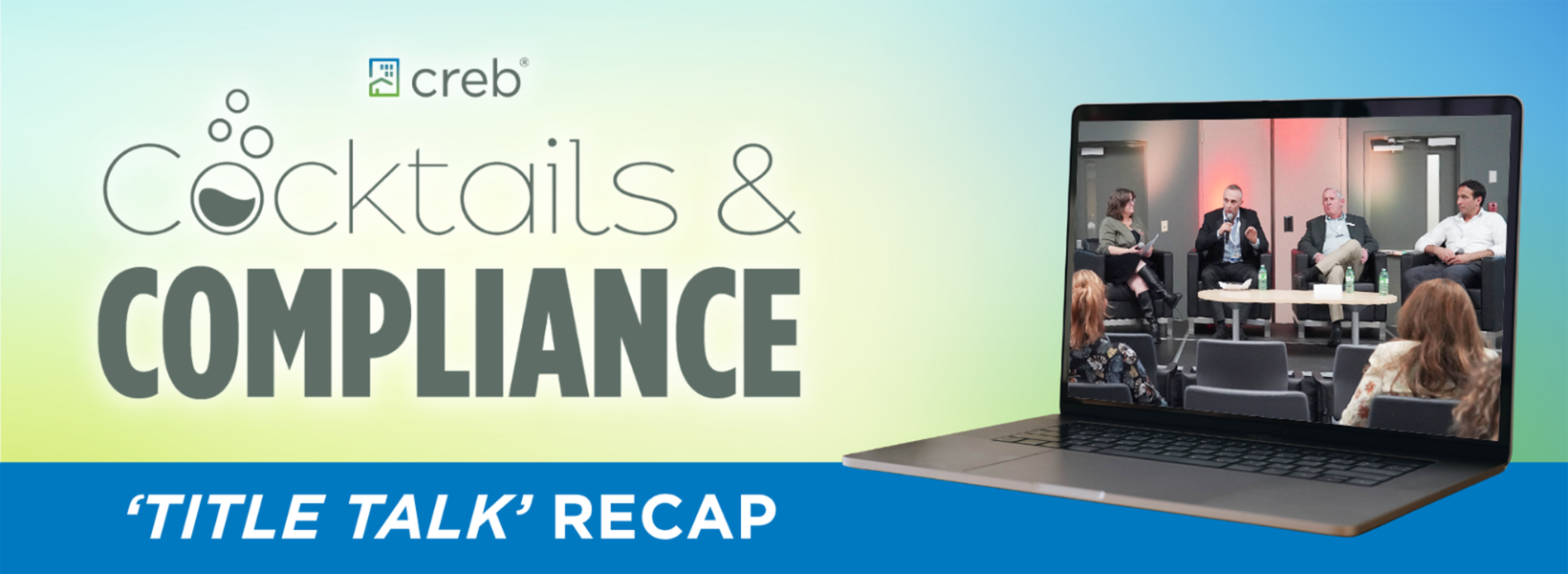
The theme of our recent fall edition of Cocktails & Compliance was “Title Talk,” with a focus on providing members with practical insights and helpful information on property titles from a stellar lineup of panelists that included Dave De La Ronde, CEO of REIX; Kristian Tzenov, Advisory Services Manager with RECA; and Jeff Kahane of Kahane Law.
When asked for their number one piece of advice for our members, all three panelists had the same answer:
Pull the title. Read the title.
This applies to both sellers’ and buyers’ representatives. Reviewing the title helps confirm ownership and identify potential concerns, such as whether dower rights apply, if the seller is a corporation, or the registered owner is deceased. In fact, Dave De La Ronde shared that REIX’s two most expensive claims resulted from members not reading the property title.
Financial encumbrances
Panelists agreed that members should obtain copies of encumbrances, caveats and/or writs registered on title that raise red flags. If there are caveats involving money owing, municipal arrears or other unusual registrations, members can obtain copies through SPIN2/ARLO for $15 each. This is a small price to pay to help determine whether the seller will have sufficient proceeds from the sale to cover outstanding debts and commissions.
Mortgages are frequently registered on title for amounts that include both the mortgage and a line of credit, sometimes totalling the property’s full value. It’s important to clarify with sellers how much is owing on each.
Members aren’t expected to interpret the legal language found in these documents. If you’re unsure about the information, speak with the seller and recommend they consult a lawyer, or seek legal interpretation yourself.
Other interesting tidbits
A title is a live document. Don’t rely on an old copy provided by the homeowner or one pulled by the seller’s agent when the property was first listed on the MLS® System. Encumbrances can be registered at any time so obtain a fresh copy to review current registrations. A current title search can also identify pending registrations that have not yet been processed by the Land Titles Office, which can often take weeks to register.
Developer encumbrances may include community guidelines or restrictions. For example, a registered encumbrance could require a home to have cedar shingles,preventing the owner from replacing them with more affordable asphalt shingles.
The address on title isn’t necessarily the property’s municipal address. The address listed after the registered owner’s name is selected by the owner and is used for notifications from the Land Titles Office. This is particularly important to note properties owned by landlords or owners who use post office boxes. In fact, the property’s municipal address isn’t identified on title, so members should not depend on titles for that information.
The date the title was pulled appears at the end of the document. If the date isn’t visible, you do not have a complete copy of the title.
Panelist consensus
All three panelists shared that they have seen serious and costly consequences when members fail to obtain and carefully review property titles.
Our advice?
Follow the expert advice of panelists Dave, Kristian and Jeff:
Pull the title. Read the title. And when something doesn’t look right, ask questions and seek professional advice.
Dave also encouraged members to use the REIX Ancillary Services Form to help identify potential property-related concerns and document important information with clients. Sharing and completing this form with your clients is another practical step you can take to help manage risk and protect yourself from potential issues down the road.
You can find the checklist on CREB®Link under Residential Forms.



{ 2 comments…}